
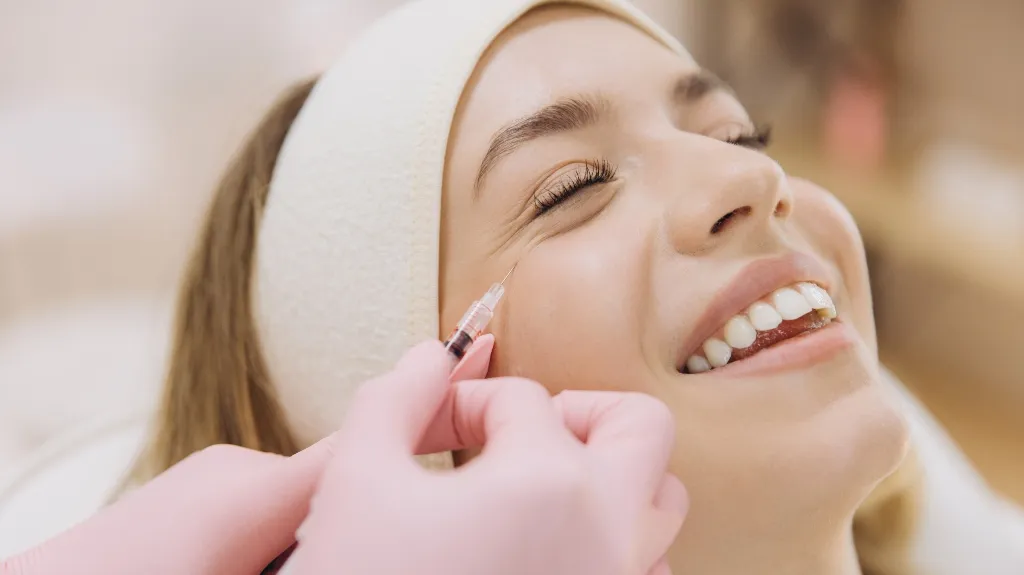
For a long time, the aesthetics conversation stopped at the surface. You booked the appointment, you smoothed the elevens, you left feeling a little more like yourself. That still matters, and we are not about to talk anyone out of their neurotoxin appointment.
But the questions women in their thirties and forties are bringing to wellness providers have widened, and search trends, podcast lineups, and the group chats everyone is in will all tell you the same thing. The question is not only “how do I look less tired.” It is “why am I so tired in the first place?”
That question is what is driving the current interest in peptide therapy and bioidentical hormone replacement. And if you have been quietly wondering whether any of it applies to you, this one is for you.
The thing nobody warned you about your thirties
Here is what tends to happen. You hit 33, 35, 38, and things start feeling slightly off in ways that are hard to put into words at your annual physical.
You are doing the same workouts and getting different results. You are sleeping seven hours and waking up like you slept four. Your temper has a shorter fuse than it used to, and you cannot tell if that is hormones or the fact that you have three kids and a job and a dog who eats furniture. Your skin is drier. Your cycle got weird. You gained eight pounds that will not come off even though absolutely nothing about your diet changed.
And when you bring it up, you often hear some version of “well, you’re getting older,” which is both technically true and completely useless.
What almost nobody explains is that hormonal change does not politely wait until you turn 50 and announce itself with a hot flash. Perimenopause can start in your mid-thirties. Progesterone often starts declining first, and it declines quietly. Estrogen fluctuates rather than dropping in a clean line, which is why symptoms can feel so erratic and so easy to dismiss. Testosterone, which women absolutely need, tends to slide steadily from the late twenties onward and takes energy, libido, and muscle tone along with it.
None of that means anything is wrong with you. It means your body is moving through a transition that most of us were never given a vocabulary for.
What bioidentical hormone therapy actually is
Let us clear up the language first, because “bioidentical” gets thrown around in a lot of marketing that is long on promises and short on explanation.
Bioidentical hormones are plant-derived compounds that are chemically identical to the hormones your body already makes. Same molecular structure. Your receptors recognize them the way they recognize what your ovaries and adrenals have been producing all along. That is the whole distinction, and it matters because older synthetic formulations were structurally different, which is part of why the research history around hormone therapy got so complicated and so scary sounding in the early 2000s.
Our bioidentical hormone replacement therapy approach starts where it should start, which is with testing rather than guessing. Symptoms tell us where to look. Labs tell us what is actually going on. A woman with brutal fatigue and a woman with brutal fatigue can have two completely different lab panels and need two completely different plans, and there is no version of this that works as a one-size protocol handed out at the front desk.
From there we build something personalized. Sometimes that is a fairly light touch. Sometimes it is more involved. The goal is not to flood your system with hormones so you feel 24 again. The goal is to restore balance so that your energy, mood, sleep, and vitality stop feeling like a daily negotiation.
It also helps to have realistic expectations about timing. Hormone therapy is not an overnight fix. Sleep and mood are often where people notice a difference earliest, while changes in body composition, skin quality, and libido tend to unfold more slowly. Individual response varies quite a bit, which is exactly why follow-up visits and repeat labs are part of the plan rather than an upsell.
The practical details, for anyone who likes to know before they call: initial consult is $200, follow-ups are $100, and lab fees and medication are separate. We would rather you know that upfront than find out at checkout.
Why peptides became the wellness world’s favorite word
Peptides are having a moment, and the moment has produced a lot of noise. So here is the plain version.
A peptide is a short chain of amino acids. Proteins are long chains. Peptides are the short ones, and your body already makes thousands of them. They function as signaling molecules, which is the useful part. They tell cells what to do. Make more collagen. Release growth hormone. Reduce this inflammatory response. Regulate appetite.
That signaling function is why peptide therapy gets discussed across such a wide range of goals. Some peptides are studied for tissue repair and recovery. Some for metabolic regulation. Some for skin, sleep, or immune support. Some are already sitting in your skincare drawer, since topical peptides have been a staple of good serums for years.
The category is genuinely promising and genuinely uneven. Research quality varies enormously from one peptide to the next. Some have solid clinical backing behind specific uses. Others have a handful of small studies and an enormous amount of internet enthusiasm. Sourcing varies too, and the gray-market corner of this industry is a real thing that we would strongly encourage you to stay away from. If a peptide arrives at your door from an unregulated overseas vendor with no provider oversight, you have no way of knowing what is actually in the vial.
This is the part where we say the unglamorous thing: peptide therapy should involve a provider who knows your history, reviews your labs, monitors how you respond, and adjusts. That is not us being precious about it. It is the difference between a therapy and a gamble.
Because the options in this space change as research and availability change, our wellness services lineup evolves along with it. The same is true of our weight management options, which is why that page tells you to call rather than listing a fixed menu. Calling really is the fastest way to find out what makes sense for you right now.
Why this is landing so hard with women in their 30s and 40s
A few things converged.
The first is information access. Women in this age bracket are the ones reading the research, listening to the podcasts, and comparing notes in group texts. They are not waiting for permission to ask about testosterone or DHEA or what their thyroid panel actually said. An informed patient makes for a better appointment, and we would take that over the alternative every time.
The second is that the cultural story about menopause finally cracked open. For decades it was treated as something you endured privately and did not discuss. That has changed fast, and the ripple effect is that perimenopause, which is the much longer and much less understood runway, is finally getting discussed too.
The third is that this generation is not particularly interested in the idea that aging is something to be fought. Aging gracefully is the goal, and gracefully does not mean invisibly. It means feeling good in your body while it changes. That reframe naturally pushes the conversation past what is happening on the surface of your face.
And fourth, practically speaking, the thirties and forties are when the gap between how you feel and how you function gets hardest to ignore. You are usually at peak demand. Career, kids, aging parents, a household that does not run itself. Running on a body that is quietly recalibrating while you carry all of that is exhausting, and at some point you stop wanting to white-knuckle through it.
Where aesthetics still fits, because it absolutely does
None of this is an argument against Botox. We would be very odd people to make that argument.
Neuromodulators do something specific and do it well. Botox, Dysport, Xeomin, and Daxxify work by blocking the release of acetylcholine, the neurotransmitter that signals nerves to muscles. Less signal, less contraction, softer lines. It is a reliable, well-understood treatment and it is popular for good reason.
What has changed is the framing. Aesthetics used to be positioned as the whole answer. Now it reads more accurately as one piece. Smoothing forehead lines is a great thing to do and it does not address why you are waking up at 3 a.m. Balancing your hormones is a great thing to do and it will not soften a deep-set eleven. They are different tools for different jobs, and the women getting the best results are usually the ones using both intentionally instead of asking one to do the other’s work.
There is also a genuine relationship between the two. Estrogen influences collagen production and skin hydration. Sleep quality shows up in your under-eyes. Chronic stress and cortisol dysregulation show up in your skin barrier and your jawline tension. When the internal picture improves, the external treatments often work better and last a little longer. That is not a marketing claim, it is just how connected the system is.
If you want to start somewhere concrete
A few honest starting points, depending on where you are.
If you have symptoms but no data. Start with a hormone consult and get labs. Guessing is the most expensive approach in this entire field, because you end up spending money on supplements and protocols aimed at a problem you have not confirmed you have.
If you are curious about the bigger picture. Our biological age and full body intelligence testing options go deeper than a standard panel. GlycanAge looks at biological age through glycan markers tied to cellular aging and immune activity. Viome’s full body testing sequences microbial RNA to look at your gut microbiome and how it is influencing metabolism, immune function, and mood, and comes back with personalized food and supplement recommendations. Neither is necessary to get started, but if you are the kind of person who wants the full data set before making decisions, this is that.
If you are running on empty and want something simple. Sometimes the answer really is smaller than you think. Vitamin injections like B12 or an immune boost are $40 and take about half an hour, and for some people that is a meaningful difference in energy without committing to anything larger.
If you are overwhelmed by all of it. That is fair, and extremely common. Come in and talk it through. You are not signing up for anything by asking questions, and there is no version of a conversation here where you get pressured into a package you did not want.
The Lawrence part of this
Megan Feighny, MSN, APRN-C, RYT-200, earned her Master’s in Nursing from Washburn University and worked in critical care, emergency departments, medspa, primary care, and urgent care settings before opening Head & Heart here in Lawrence. The throughline of that career has been safe, affordable, accessible healthcare, and that is the standard the practice is built around. You can read more about her background on our about page.
What that looks like in practice is transparent pricing, real time in the room with you, and a provider who will tell you when something is not a fit. If hormone therapy is not right for where you are, we will say that. If a peptide protocol you read about is not well supported, we will say that too, and we will tell you what we would do instead.
The short version
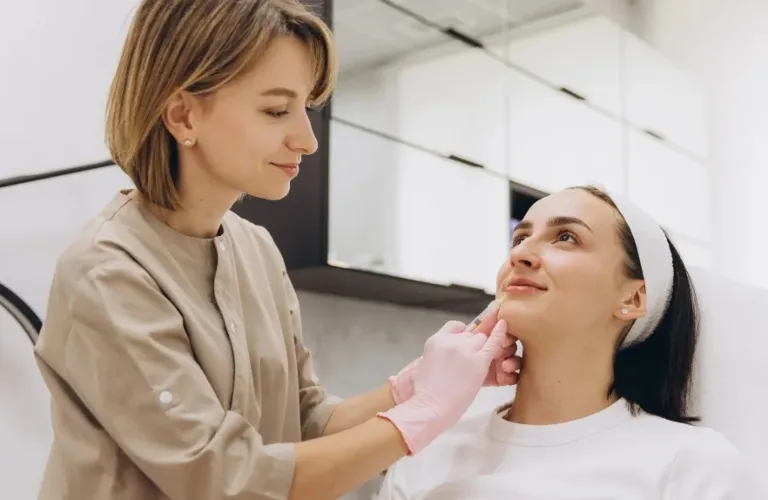
Women in their thirties and forties are not abandoning aesthetics. They are widening the frame. Botox handles the lines. Hormone therapy and peptide-based approaches address the fatigue, the sleep, the stubborn weight, the mood swings, and the low-grade sense that something has been off for a while.
Both matter. Neither replaces the other. And you do not have to figure out which one you need on your own, because that is literally what the consult is for.
If any of this sounded uncomfortably familiar, come talk to us. We start with your actual symptoms rather than a script.
One note for anyone new: we take new clients by personal referral from an existing Head & Heart patient or a professional partner, and we verify referrals before confirming an appointment. If you know someone who comes here, mention their name when you reach out. If you are not sure whether you qualify, call and ask. We are happy to walk you through it. You can book here or call 785-592-3800.
No pressure, no stress. Just wellness that works for you.